The Student Loan Mess by Best Joel Best Eric
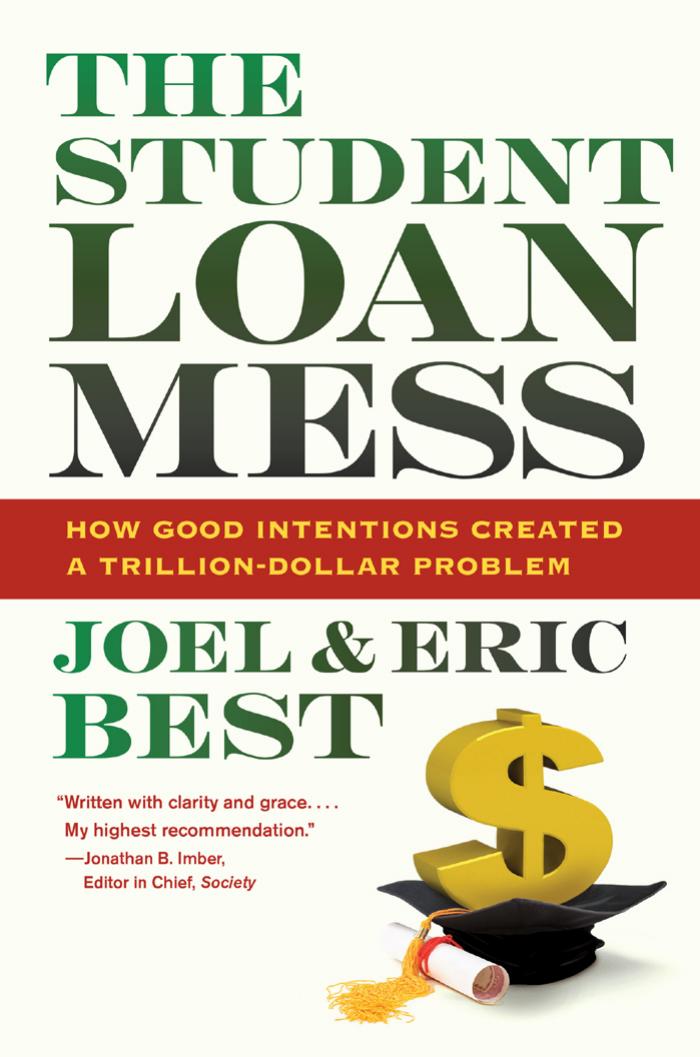
Author:Best, Joel, Best, Eric
Language: eng
Format: epub, pdf
ISBN: 9780520276451
Publisher: University of California Press
TOO BIG TO FAIL?
If for-profit higher education turns out to be a bubble, it will not be because officials and the media failed to raise questions about the schools’ problematic relationship to student loan programs. After all, Congress had been holding hearings on student loan defaults and for-profits since the 1970s, yet the for-profit sector continued to grow. Why didn’t someone rein in the growth of for-profits, which were utterly dependent on the availability of federal student loan funds? Why weren’t people more concerned about the danger of a bubble collapsing?
In part, the answer lay in the bookkeeping methods the federal government used to keep track of student loans. Let’s say you loan ten bucks to your buddy. If you suspect that your buddy won’t be able to repay you or can’t be counted on to remember to repay you, you might simply think of that money as gone—your loss. Or if you consider your buddy completely reliable, you might be confident that you will in fact get your ten bucks back at some point, so you view the money you loaned out as an asset. Government accountants adopt the latter view. Imagine that the government loans $1,000 to a student. You might think of that as an expenditure, but in bookkeeping terms, the cost of lending is counterbalanced by the $1,000 (plus interest) the student owes the government. The money owed to the government is treated as an asset, at least until the loan is written off as uncollectable. Suppose the student postpones repayment: the asset grows because the student now owes additional interest. Suppose the student stops paying and is in default: the asset’s value increases still further through a combination of penalties and compound interest. In other words, from a bookkeeping standpoint, lots of defaults are not a problem because they translate into big assets. And that way of thinking is not completely fanciful, because the government is powerful enough to track down student debtors and compel many of them to repay what they owe.43
As a consequence, even when student loan debt crossed the trillion-dollar threshold in 2012, from a bookkeeper’s perspective, this did not seem all that alarming. So long as one assumed that the federal government would be able to compel repayment, all the debt individual students had accrued simply meant that the government had big assets on its books. But was that a realistic assessment? Would all those former students in fact be able to repay what they owed? Or would the government have to write off a lot of those debts and start treating them as losses instead of assets?
If the government’s accounting methods could be criticized for offering an excessively rosy vision of the long-term costs of student loans to the government, critics on the left interpreted these paper assets as proof that the terms for student loans were too harsh. Thus the lead sentence in a June 2013 report in the Huffington Post declared: “The Obama administration is forecast to turn
Download
This site does not store any files on its server. We only index and link to content provided by other sites. Please contact the content providers to delete copyright contents if any and email us, we'll remove relevant links or contents immediately.
The Art of Coaching Workbook by Elena Aguilar(51199)
Trainspotting by Irvine Welsh(21666)
Twilight of the Idols With the Antichrist and Ecce Homo by Friedrich Nietzsche(18632)
Fangirl by Rainbow Rowell(9250)
Periodization Training for Sports by Tudor Bompa(8272)
Change Your Questions, Change Your Life by Marilee Adams(7781)
This Is How You Lose Her by Junot Diaz(6887)
Asking the Right Questions: A Guide to Critical Thinking by M. Neil Browne & Stuart M. Keeley(5775)
Grit by Angela Duckworth(5615)
Red Sparrow by Jason Matthews(5473)
Paper Towns by Green John(5191)
Room 212 by Kate Stewart(5121)
Ken Follett - World without end by Ken Follett(4732)
Housekeeping by Marilynne Robinson(4447)
The Sports Rules Book by Human Kinetics(4386)
Papillon (English) by Henri Charrière(4274)
Double Down (Diary of a Wimpy Kid Book 11) by Jeff Kinney(4272)
The Motorcycle Diaries by Ernesto Che Guevara(4101)
Exercise Technique Manual for Resistance Training by National Strength & Conditioning Association(4071)
